
How to Scale a Recipe Up or Down Without Ruining It
How to scale a recipe: the conversion factor, what scales linearly and what doesn't (spices, eggs, pan size, baking time), with worked examples.
By Ayoub Farid · · 2 min read
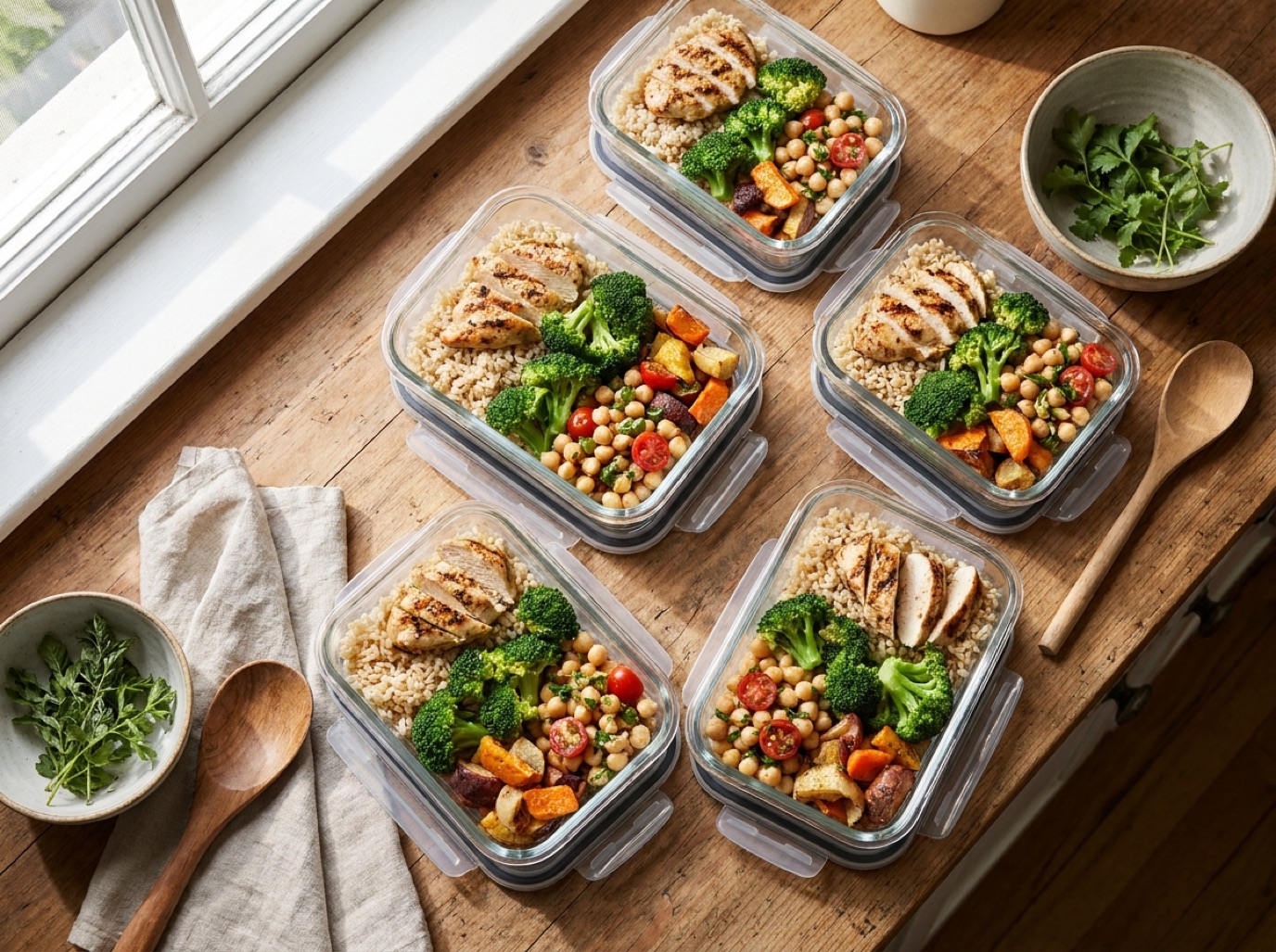
Doubling a recipe for guests or halving it for two seems like simple math, and for most ingredients it is. But pan size, cooking time, spices, eggs and baking chemistry don't always scale neatly.
Step 1: Find the conversion factor
Factor = servings you want ÷ servings in the recipe.
- Recipe serves 4, you need 6: 6 ÷ 4 = 1.5
- Recipe serves 8, you need 2: 2 ÷ 8 = 0.25
Multiply every ingredient by the factor.
In SmartChef AI, change the servings on a recipe and the ingredient amounts adjust for you.
Step 2: Convert awkward amounts
Scaling creates odd numbers like "⅜ cup" or "1.5 eggs". Easier:
- Use weights. 1.5 × 120 g flour = 180 g. No fractions. See cups to grams.
- Know the spoon conversions: 3 tsp = 1 tbsp; 16 tbsp = 1 cup.
- Half an egg: beat it and use about 25 g (half of a ~50 g large egg without shell). See how to halve a recipe.
What scales linearly
- Most vegetables, proteins, grains, pasta and liquids in soups and stews.
- Flour, sugar and butter in baking (by weight).
What needs judgment
Spices, salt and chili
Scale up by a little less than the factor, then taste and adjust at the end. Strong flavors can become overpowering when tripled.
Liquids in braises and roasts
Wider pans evaporate more. When doubling a braise in a larger pot, you may need less than double the liquid.
Leaveners
For small changes (×1.5, ×2), scale baking soda and baking powder normally. For large batches, results can vary. Bakers often mix several smaller batches.
Eggs
Round sensibly, or weigh.
Pan size and cooking time
- Doubling a casserole: use two pans or a larger, deeper pan. Deeper food takes longer.
- Halving a cake: use a smaller pan so depth stays similar; time drops slightly.
- Roasting more pieces: time stays similar if pieces are the same size and the tray isn't crowded.
- Check doneness by sign or temperature, not just time.
| Pan | Approx. area |
|---|---|
| 20 cm / 8 in square | 400 cm² / 64 in² |
| 23 cm / 9 in square | 530 cm² / 81 in² |
| 23 × 33 cm / 9 × 13 in | 760 cm² / 117 in² |
| 23 cm / 9 in round | 415 cm² / 64 in² |
Matching area keeps the depth (and cooking time) similar.
Worked example: chili for 4 → 10
Factor 2.5. Beef 500 g → 1.25 kg. Beans 2 tins → 5 tins. Tomatoes 2 tins → 5 tins. Chili powder 2 tbsp → start with 4 tbsp (not 5), taste after 30 minutes and add more if needed.
Frequently asked questions
Can I double a baking recipe?
Usually yes for cookies, muffins and brownies. For cakes and bread, two separate batches are often more reliable.
Do cooking times double when doubling a recipe?
No, but they often increase if the food is deeper in the pan. Check by temperature and appearance.
How do I scale spices?
Scale slightly less than the factor and adjust by taste at the end.
Save it in one tap
Every recipe you love, in one smart kitchen
SmartChef AI saves recipes from TikTok, Instagram and any website, scans cookbooks and handwritten cards, and answers your cooking questions with an AI chef. Free to download on iPhone and iPad.
Download on theApp Store